
Smart glasses stopped being a novelty the moment Ray-Ban put a camera in a Wayfarer. Here are the 10 worth actually putting on your face right now.
#10 — Rokid Max/Max 2 Prescription Lens Inserts
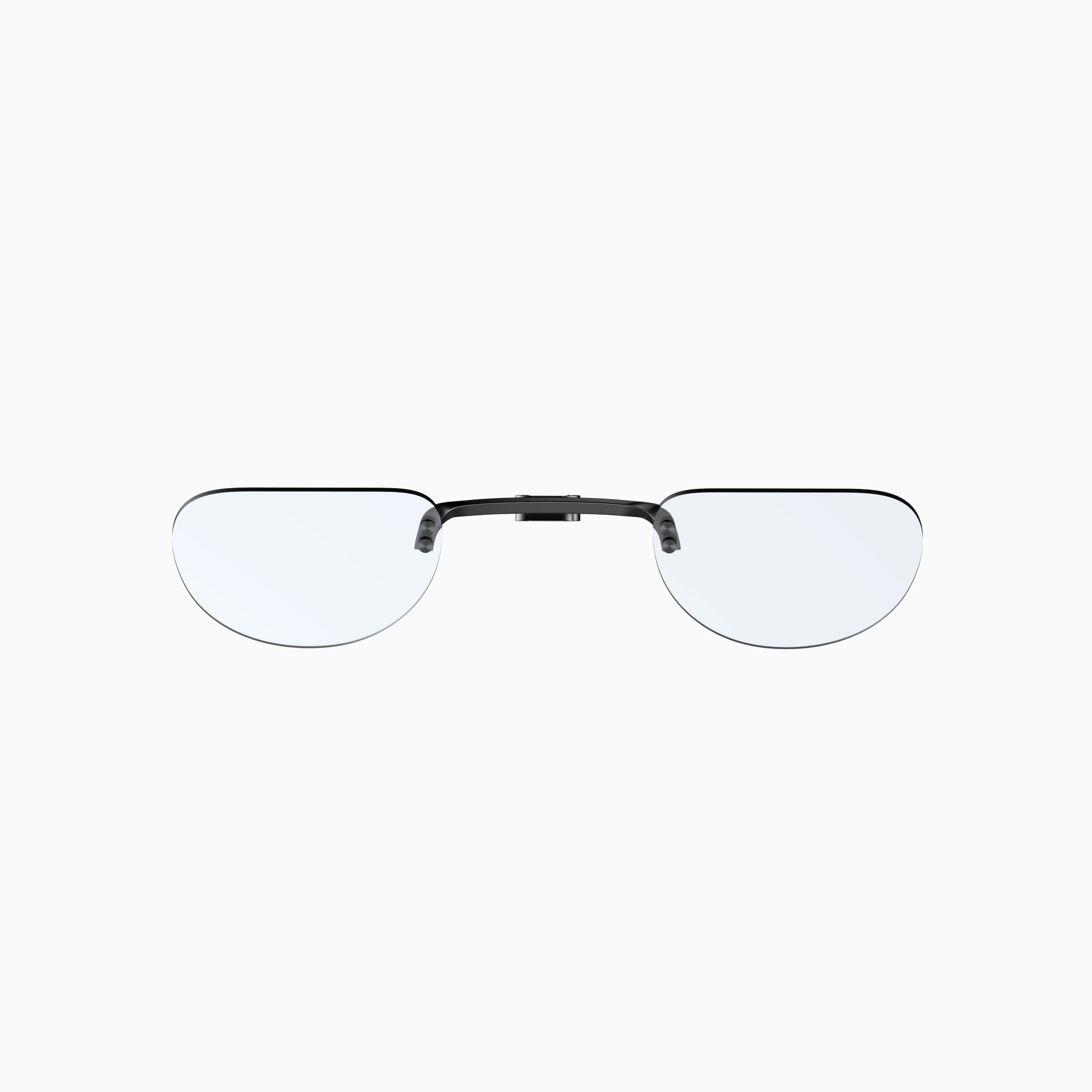
AR glasses assume everyone has 20/20 vision, which is a strange assumption for a product category built entirely around staring at a screen a few inches from your eyes.
This insert clips directly onto the inside of the frame, sitting your actual prescription between your eyes and the display so the built-in diopter dial doesn’t have to cover for glasses you’d otherwise need to wear underneath. It’s a small, inexpensive fix for a problem that otherwise makes AR glasses genuinely unusable for a lot of people. The one catch is it only covers mild-to-moderate prescriptions on its own — higher corrections need a custom lens ordered through a third-party optical lab. But for the range it does cover, it’s the difference between usable and not.
The one accessory that decides whether AR glasses work for your eyes at all.
- Why it’s #10: Solves the exact problem that otherwise makes AR glasses unusable without contacts
- Best for: Anyone who wears glasses and wants to add a Rokid AR headset to the mix
#9 — Foldable Charging Case for Ray-Ban Meta
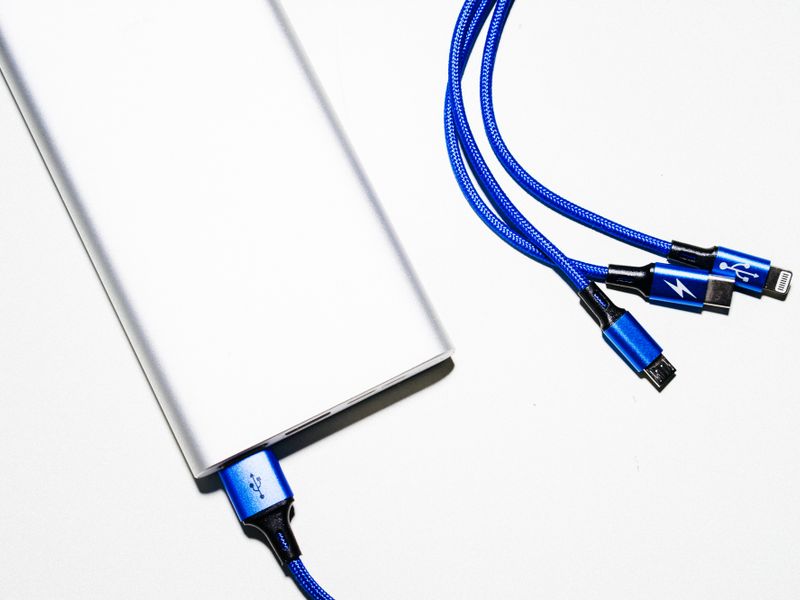
Ray-Ban Meta glasses run out of battery in a single afternoon of casual use, and unlike a phone, there’s no easy way to top them off mid-day without carrying the bulky included charging case.
This foldable version shrinks that case down to something that actually fits in a pocket, with a 2000mAh battery that can recharge the glasses on the go instead of leaving them dead for the rest of the night out. It’s a genuinely necessary accessory rather than an optional nice-to-have, given how short the glasses’ battery actually runs. The one limitation is it only works with the specific frame styles it’s built for (Wayfarer, Headliner, Skyler, and a few others) — always double check compatibility before buying. But for anyone who’s had their glasses die by dinner, that’s a small detail.
The backup battery that makes the short battery life a non-issue.
- Why it’s #9: A genuinely necessary backup for a battery life that runs out faster than expected
- Best for: Anyone whose Ray-Ban Meta glasses keep dying mid-afternoon
#8 — Amazon Echo Frames

Most smart glasses try to do everything at once — camera, display, AI assistant — and end up compromising on all three. Sometimes the actual want is just “let me hear Alexa without covering my ears.”
Echo Frames do exactly that one thing well: open-ear speakers that pipe in music, calls, and Alexa without blocking out the room, in a genuinely normal-looking frame that doesn’t scream “camera glasses” the way some competitors do. No camera means no privacy concerns to explain to everyone in the room, either. The one trade-off is the narrower feature set — no photos, no video, no AI vision. But for the specific job of hands-free audio and smart home control, that focus is the whole appeal.
The smart glasses that do one thing instead of trying to do everything.
- Why it’s #8: Open-ear audio and Alexa control in genuinely normal-looking frames, no camera privacy concerns
- Best for: Anyone who wants hands-free audio without the camera features they’d never use
#7 — Bose Frames Tenor
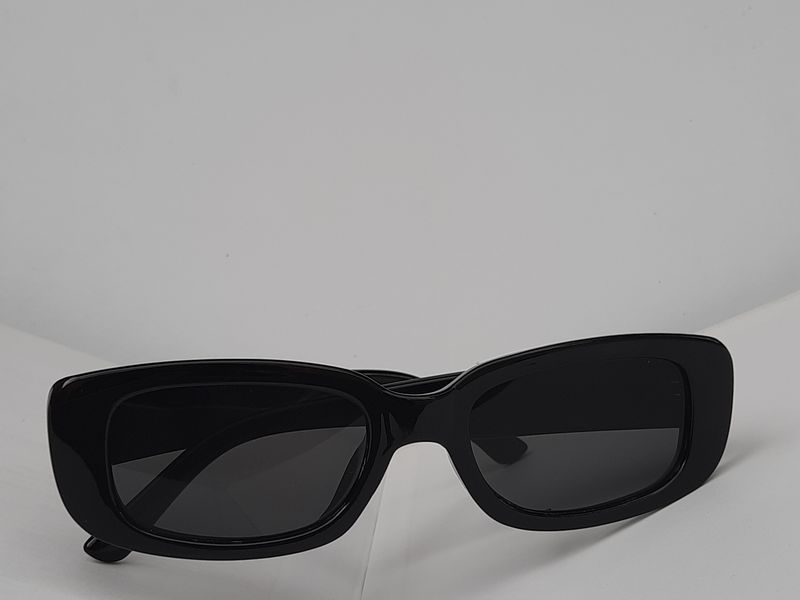
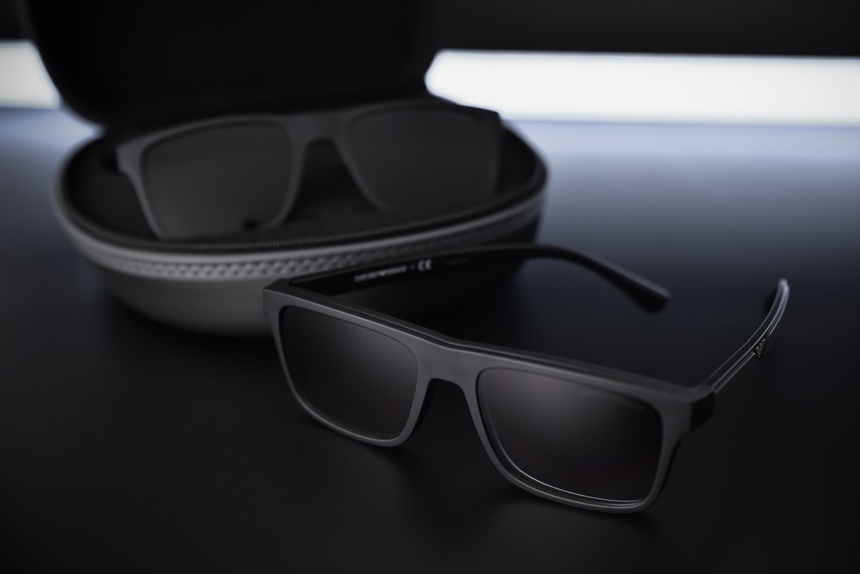
Regular earbuds isolate you from your surroundings exactly when that’s the last thing you want — running near traffic, at the gym, or just trying to hear someone talk to you mid-song.
Bose’s OpenAudio design solves that specific problem by beaming sound into your ears from the temples instead of blocking them, so music and calls stay clear while the actual world around you stays fully audible. The refined square frame and keyhole bridge also just look like normal sunglasses, not tech demo hardware. The one drawback is battery life tops out around 5.5 hours, shorter than true wireless earbuds. But for anyone who’s ever missed a car horn because of noise-canceling earbuds, that trade feels worth it.
The audio upgrade that doesn’t cut you off from the room.
- Why it’s #7: Open-ear sound that never isolates you from traffic, gym noise, or conversation
- Best for: Runners, commuters, or anyone who needs to stay aware of their surroundings
#6 — Solos AirGo A5
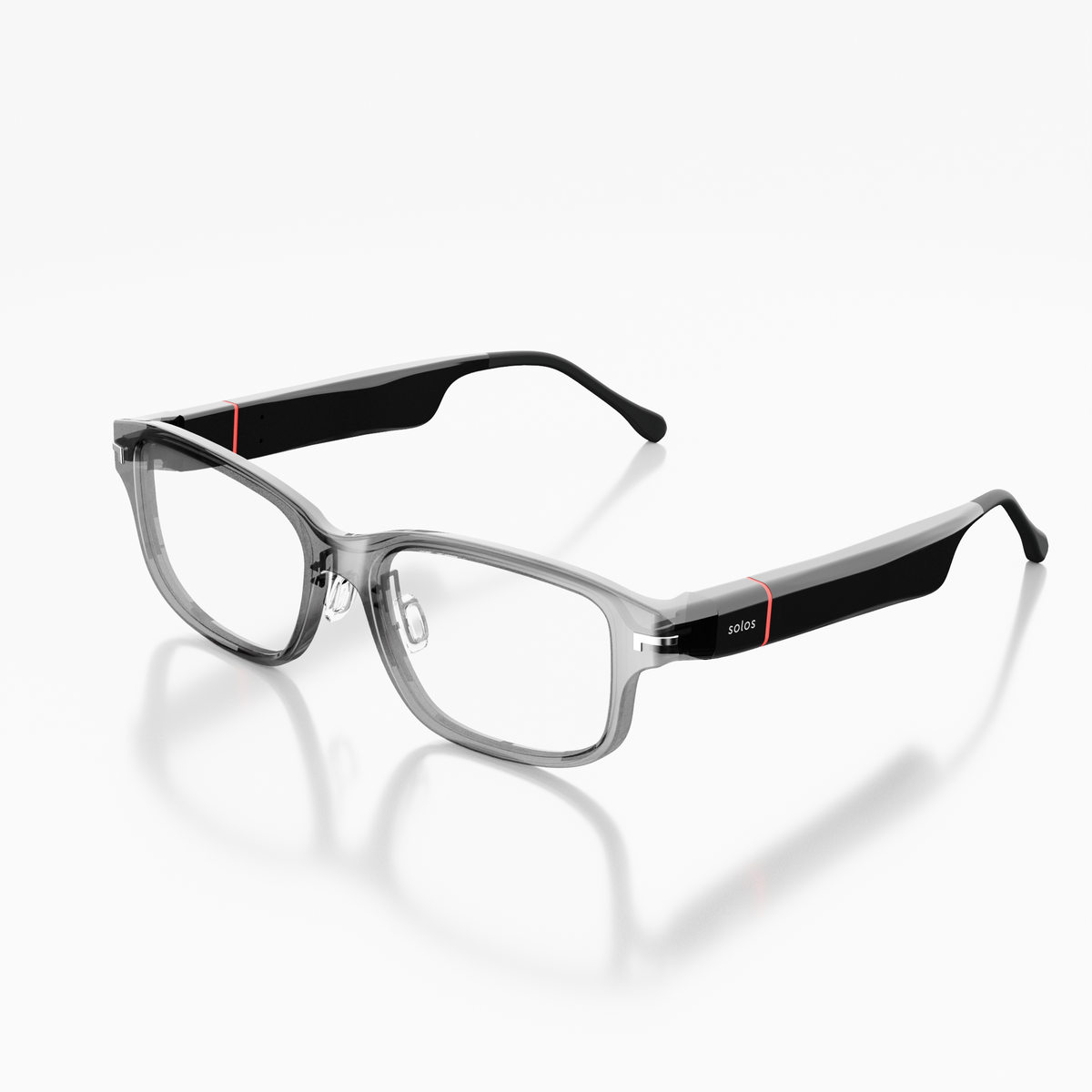
Traveling in a country where you don’t speak the language usually means holding up a phone and hoping a translation app keeps up with a real conversation in real time.
The AirGo A5 handles that hands-free instead, with real-time translation and ChatGPT built directly into the frame, so a conversation can keep moving naturally instead of pausing for someone to type into a phone. Stereo speakers and blue light blocking round it out as a genuinely usable everyday pair, not just a travel gadget. The one catch is translation quality still depends on a solid data connection, same as any phone-based app. But for hands-free translation specifically, having it built into glasses beats fumbling with a phone mid-conversation.
The translator that doesn’t require holding up a phone mid-conversation.
- Why it’s #6: Real-time translation and ChatGPT built directly into the frame, fully hands-free
- Best for: Frequent travelers who want translation without pulling out a phone
#5 — RayNeo Air 2s
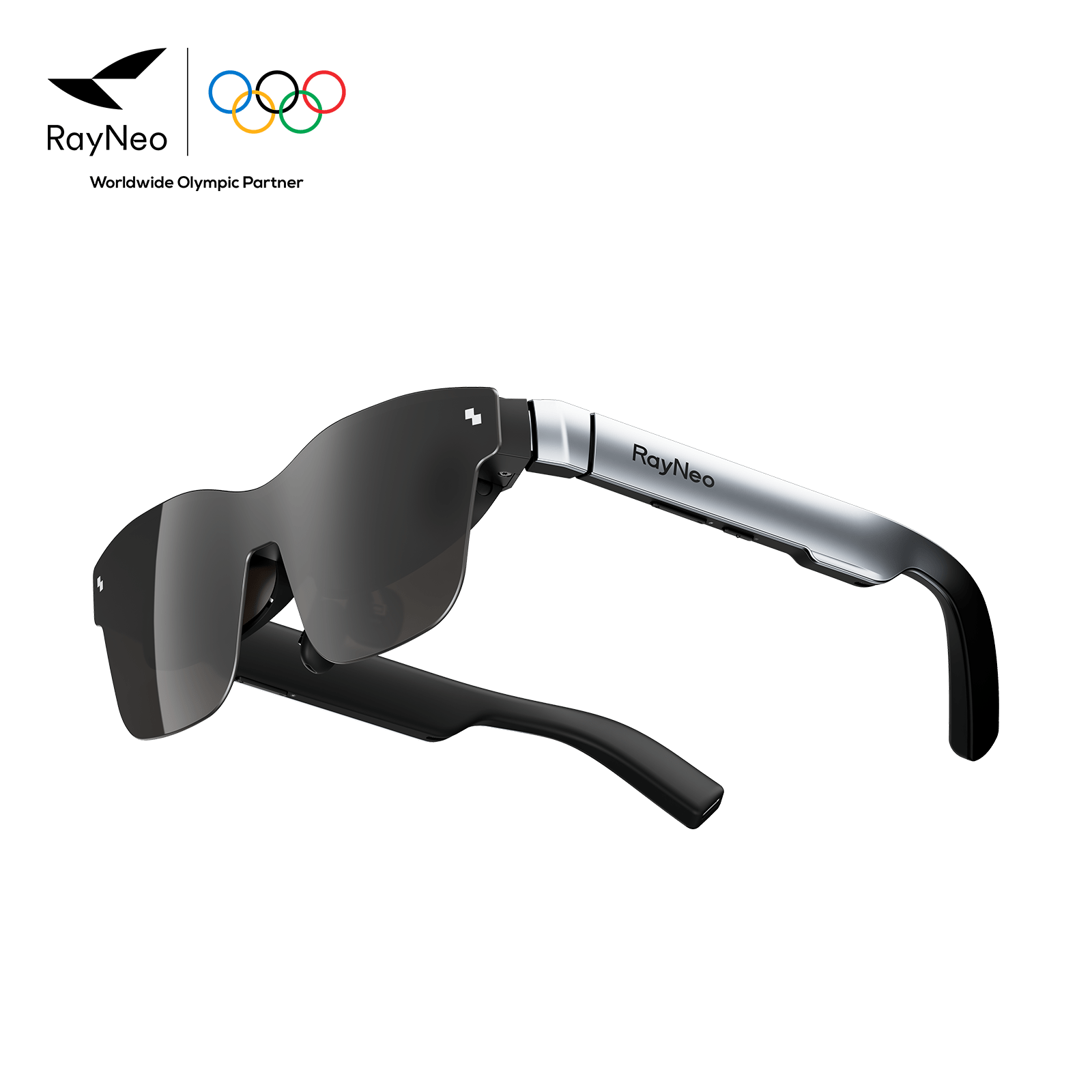
A gaming handheld or laptop screen is a fine size for actual work, but watching a movie or playing a big-screen game on it feels cramped compared to what a real TV would give you.
The Air 2s solves that by projecting what’s effectively a 201-inch screen straight into your field of view, plugging into a Switch, Steam Deck, or phone over a single USB-C cable with no setup beyond that. The quad-speaker audio noticeably outperforms most AR glasses in this price range, adding real bass instead of thin, tinny sound. The one limitation is it’s a display accessory, not a standalone AI device — it needs a real device to plug into. But for turning any USB-C screen into a personal theater, that’s exactly the job it’s built for.
The personal 201-inch screen that fits in a jacket pocket.
- Why it’s #5: Noticeably better audio than most AR glasses in this range, plus a genuinely huge virtual screen
- Best for: Gaming or movies on a Switch, Steam Deck, or phone during travel
#4 — Rokid Max 2
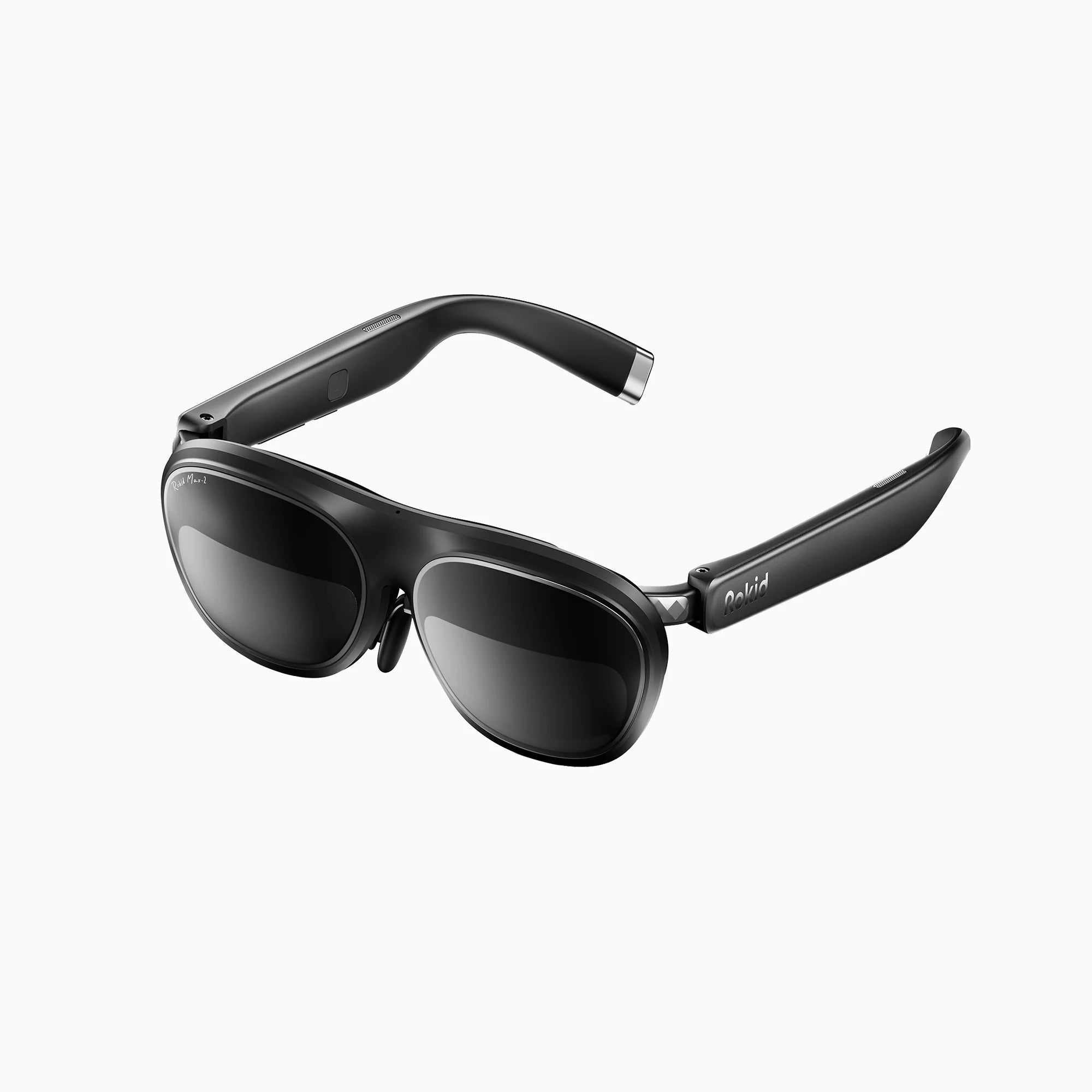
Working from a laptop screen on a plane or in a cramped hotel room means squinting at a 13-inch display for hours, which is exactly the kind of thing that makes travel workdays exhausting.
The Max 2 turns any USB-C device into a massive 215-inch virtual monitor at just 75 grams, powering directly off the connected phone or laptop with no internal battery to manage or charge separately. Built-in diopter adjustment up to -6.00D means a lot of nearsighted users can skip prescription inserts entirely. The one drawback is anyone outside that diopter range or with astigmatism will need the separate lens insert accessory. But for turning a cramped laptop screen into an actual usable-size monitor anywhere, that’s a small ask.
The 215-inch monitor that lives in a pocket instead of a bag.
- Why it’s #4: Built-in diopter adjustment covers a lot of prescriptions without needing separate lens inserts
- Best for: Working or watching video on the go without a full laptop screen
#3 — XREAL Air 2
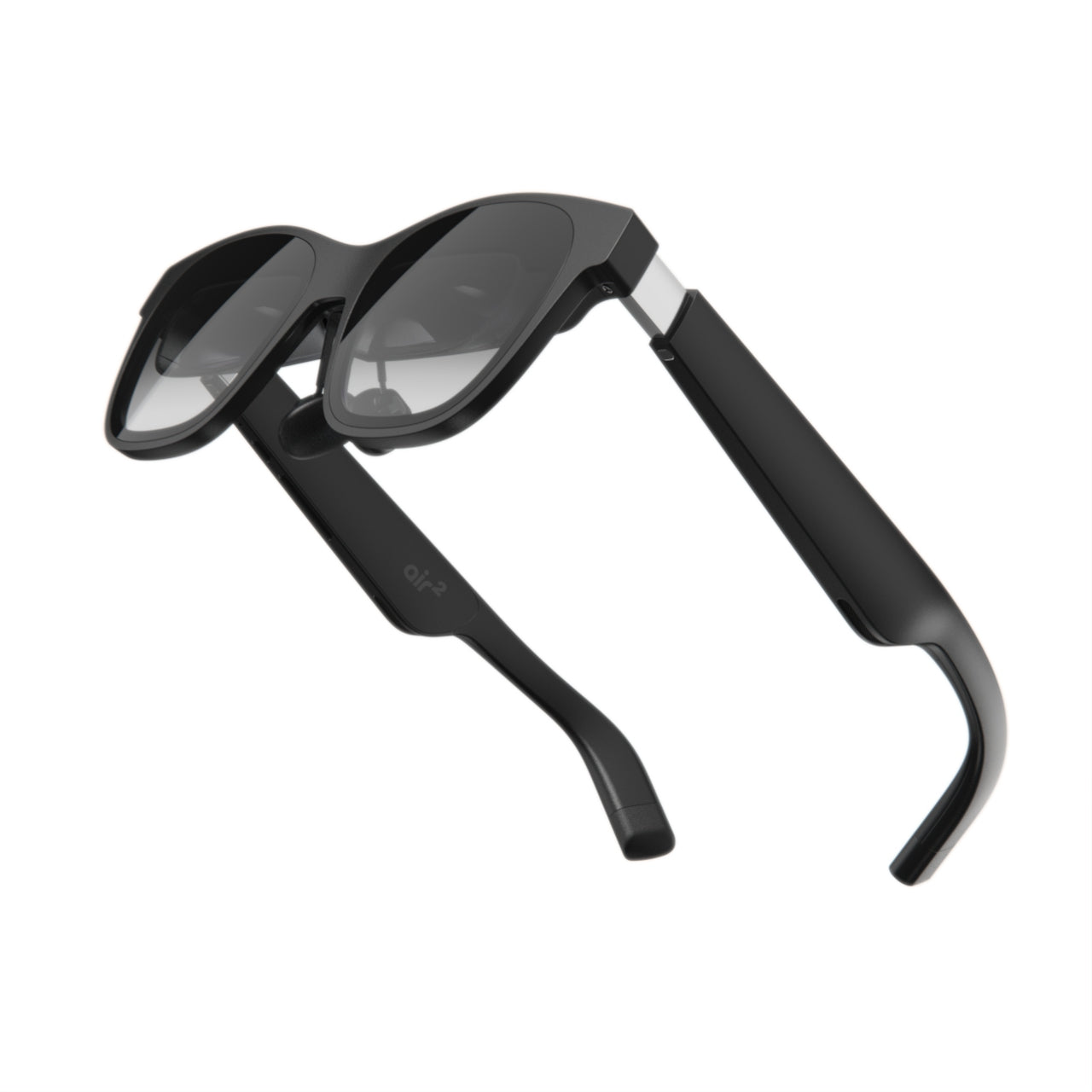
Most AR glasses brands are new enough that long-term reliability is still an open question, which matters when the whole pitch is “replace your monitor with this.”
XREAL has been in this exact category the longest of any brand on this list, and it shows in the details — TÜV Rheinland-certified eye comfort, genuinely all-day wearable weight, and the widest device compatibility of any pair here, from iPhones to Steam Deck to PlayStation. The included prescription lens insert slot means it’s ready for glasses-wearers out of the box, not an afterthought. The one drawback is it’s priced at a premium over some newer competitors with similar specs on paper. But for the brand with the most track record in this specific category, that premium buys real reliability.
The established name in a category still full of unproven newcomers.
- Why it’s #3: The most track record and widest device compatibility of any AR glasses brand on this list
- Best for: Anyone who wants the safest bet in a still-new product category
#2 — Ray-Ban Meta Skyler (Gen 1)
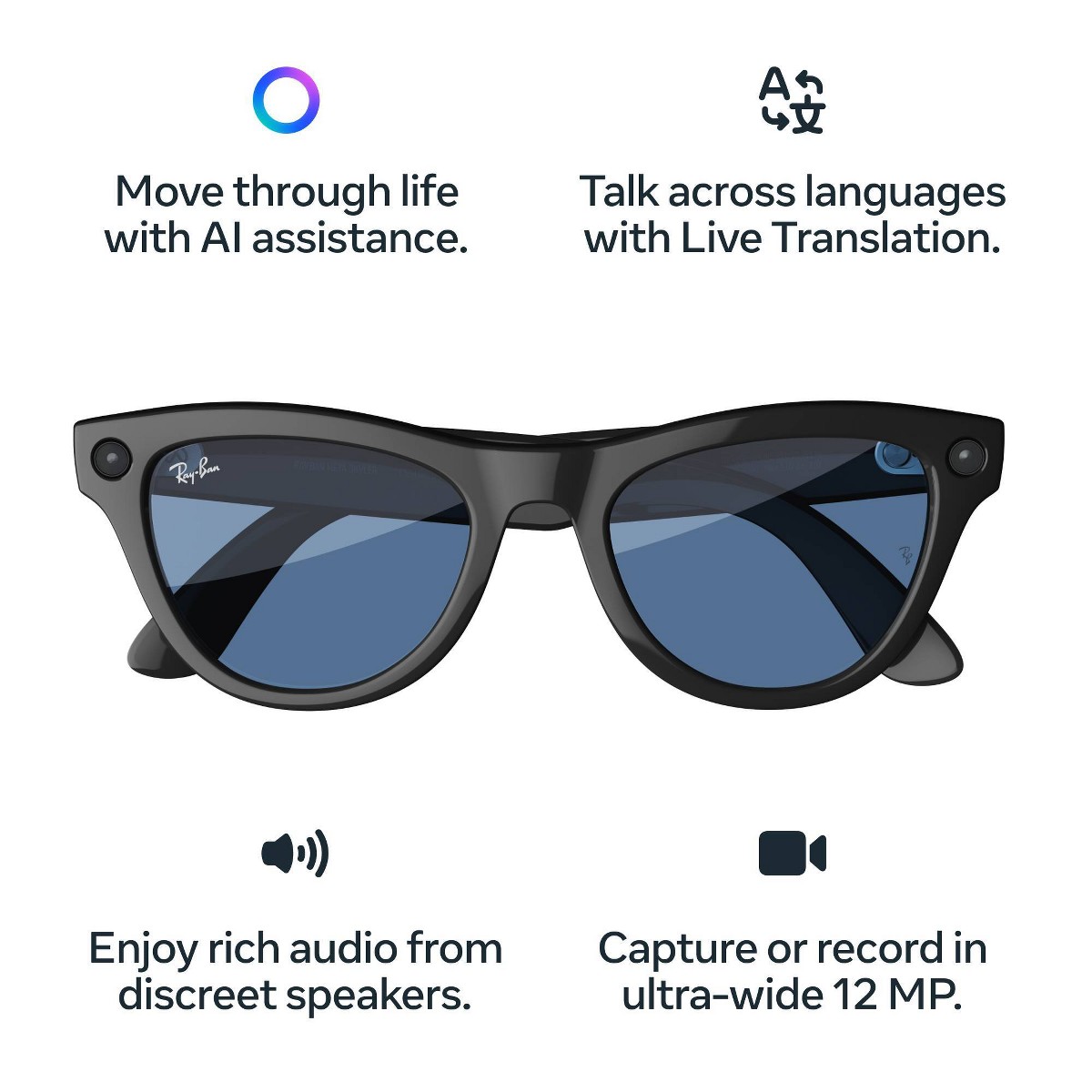
The classic Wayfarer shape isn’t for everyone, and a lot of the smart glasses conversation assumes there’s only one style worth wanting.
The Skyler proves otherwise with a rounder, cat-eye-adjacent shape and Transitions lenses that shift from clear to tinted depending on the light, all while packing the same 12MP camera, open-ear audio, and Meta AI as the Wayfarer models. It’s proof the smart glasses category has actually grown past a single silhouette. The one catch is Gen 1 means it’s a step behind the Gen 2 Wayfarer’s longer battery and higher-res camera. But for anyone who wants the tech in a shape that actually suits their face, that trade-off is worth making.
Proof smart glasses aren’t stuck with just one shape.
- Why it’s #2: The same core AI features as the flagship, in a genuinely different frame shape
- Best for: Anyone who wants Ray-Ban Meta’s features without the Wayfarer shape
#1 — Ray-Ban Meta (Gen 2)
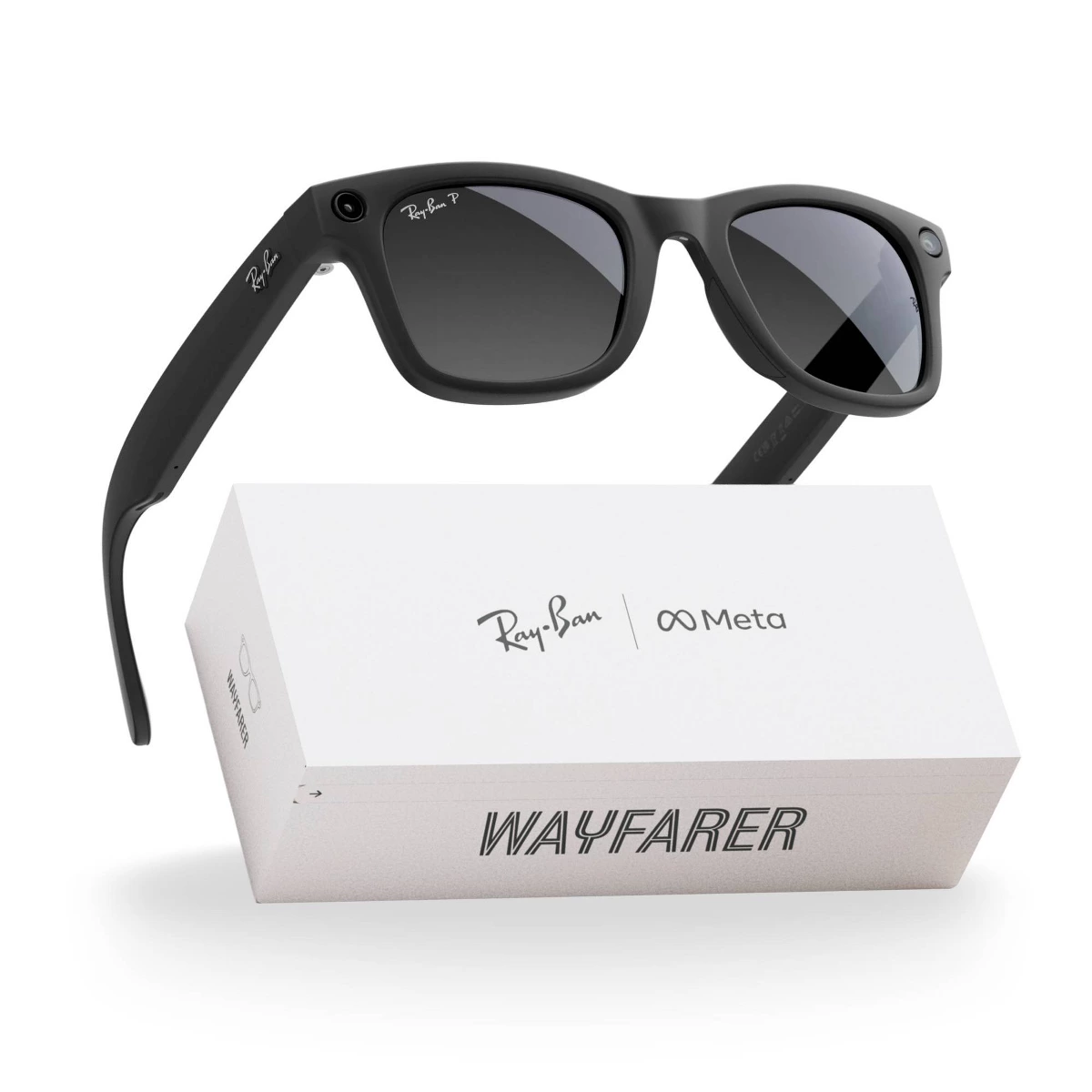
Every other pair on this list is solving one specific piece of the smart glasses puzzle. This is the one that put all the pieces together and actually made millions of people want to wear a camera on their face.
Gen 2 doubled the battery life over the original, bumped the camera to 3K video, and made Meta AI genuinely useful for real-time questions, object identification, and live translation, all in a frame that still just looks like a normal pair of Wayfarers. Over 7 million pairs sold in a single year isn’t hype, it’s the actual market deciding this is the one to buy. The one honest drawback is the same one every camera-equipped pair on this list shares: some rooms and some people are understandably not thrilled about a hidden camera nearby. But for balancing genuine utility with a shape people already wanted to wear, this is the pair that got smart glasses to actually catch on.
The pair that made everyone else on this list possible.
- Why it’s #1: Doubled battery life, 3K video, and genuinely useful AI, in a shape millions already wanted to wear
- Best for: Anyone who wants the single most proven, most-used smart glasses on the market
Bottom Line
Start with what problem you’re actually trying to solve — the Ray-Ban Meta Gen 2 for an everyday camera-and-AI pair, or an XREAL or Rokid pair if a bigger virtual screen is the real goal. Everything else on this list, from the charging case to the lens inserts, is what makes whichever pair you pick actually work day to day.
Leave a Reply